Verity: The Uncomfortable Space Between Truth and the Story We Tell
I went to see Verity expecting a psychological thriller.
What I wasn’t expecting was how much I would recognise in its questions about marriage, manipulation, perception and, perhaps most uncomfortable of all, the stories we tell ourselves in order to keep loving someone.
The film is deliberately disorientating.
And perhaps that is why it stayed with me.
A House Full of Secrets
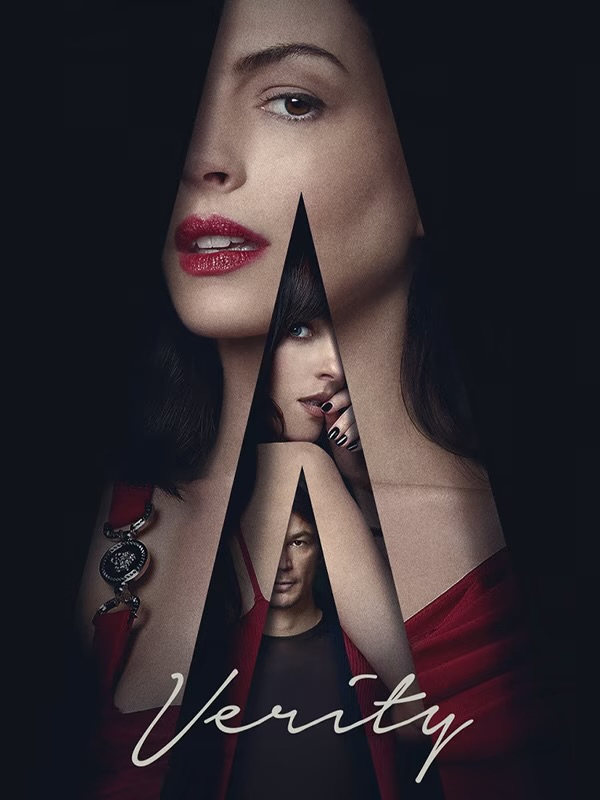
Lowen Ashleigh arrives at the Crawford family home as an outsider.
She is there to finish the bestselling books of Verity Crawford, a hugely successful author who is now lying incapacitated upstairs following a devastating accident.
At first, Lowen is simply doing a job.
Then she finds the manuscript.
And everything changes.
The manuscript appears to be Verity’s private account of her life — her marriage, her children, her thoughts and the darkest parts of herself.
Suddenly Lowen is looking at the family through an entirely different lens.
I understood that feeling.
Not the circumstances, obviously, but the experience of discovering that the person you thought you understood may be much more complicated than the version you had spent years believing.
My own marriage didn’t unravel because of one enormous revelation.
It was much less cinematic than that.
It was a collection of things.
Decisions that slowly changed the atmosphere of our home. And broke the marriage again & again.
At the time, each thing had its own explanation.
There was always a reason.
And because I loved my husband, I wanted the reasons to be enough.
That is one of the most interesting things about Verity for me.
The manuscript doesn’t simply give Lowen information.
It changes the meaning of everything she already knows.
When One Piece of Information Changes the Whole Picture
That is what happens when you begin recognising a pattern in your own life.
You don’t necessarily discover something completely new.
Sometimes you simply understand the old things differently.
A moment that once seemed isolated becomes part of a pattern.
A conversation you thought was an argument becomes something you recognise as part of a much larger dynamic.
A behaviour you repeatedly excused begins to look less like an exception and more like a choice.
I think that is why hindsight can be so painful.
You aren’t only grieving what happened.
You are grieving the version of the past you believed you were living.
Lowen, Verity and the Problem of Belief
What makes the film particularly clever is that Lowen doesn’t know who to believe.
The manuscript says one thing.
The people around her suggest another.
Her own observations suggest something else.
And her feelings become increasingly involved.
That is a dangerous place to be psychologically.
Because once your emotions become involved, certainty becomes much harder.
I know that feeling.
There were times in my marriage when I questioned whether I was being too sensitive, too demanding, too unforgiving.
I would look at what was happening and then immediately look for the explanation that made it easier to stay.
Perhaps this was just a difficult period.
Perhaps things would change.
Perhaps I should be more understanding.
Perhaps I wasn’t handling it correctly.
That is the strange thing about loving someone.
You can become extraordinarily good at arguing against your own evidence.
The Person Everyone Else Sees
One of the most compelling aspects of Verity is the difference between the woman the world knows and the woman revealed through the manuscript.
Verity has an extraordinary public identity.
She is successful.
Creative.
Accomplished.
A wife.
A mother.
Someone whose life looks, from the outside, enviable.
And yet Lowen discovers a private version that is profoundly disturbing.
That contrast resonated with me.
Because there is always a difference between a relationship as other people see it and a relationship as it feels from inside the home.
People see photographs.
They see family occasions.
They see the successful moments.
They see the person you bring into the room.
They don’t necessarily see what happens when the front door closes.
And I think that is something Verity understands instinctively.
A beautiful house can contain an unhappy marriage.
A successful person can behave terribly.
A family photograph can be completely genuine and still tell you almost nothing about the emotional reality behind it.
The Manuscript as Evidence
The manuscript becomes almost another character in the film.
It is evidence.
But it is also potentially fiction.
And that distinction is everything.
Lowen has to decide whether what she is reading is a confession or a piece of writing.
And because Verity is an author, the audience can never completely separate the writer from the writing.
That made me think about something else.
When you have lived through a difficult relationship, you can sometimes become obsessed with evidence.
You want to prove that what you experienced was real.
You replay messages.
Remember conversations.
Keep dates.
Think about what happened and when.
You want the story to become so indisputable that nobody can reinterpret it.
But eventually I realised something.
I don’t need a manuscript proving my life happened.
I lived it.
And perhaps that is one of the reasons the film affected me.
Lowen is desperate to know which document contains the truth.
But real life doesn’t always give us that luxury.
Sometimes we have to make decisions based on the pattern rather than one definitive piece of evidence.
Jeremy and the Complexity of the Victim
Jeremy is another reason the film is so difficult to read.
He initially appears to be the grieving husband.
The devoted father.
The man living with unimaginable loss.
And because we see him through Lowen’s eyes, we are encouraged to feel sympathy for him.
But the film keeps making us question that sympathy.
Is he exactly who he appears to be?
Or are we being given another carefully controlled version of the story?
That made me think about how easily we can confuse suffering with innocence.
Someone can genuinely suffer.
Someone can have their own wounds.
Someone can have experienced difficult things themselves.
And still cause harm.
That was an important lesson for me.
Understanding why somebody behaves the way they do does not make the behaviour acceptable.
Compassion and accountability are not opposites.
The Children at the Centre of It
And then there are the children.
That is where the film becomes particularly uncomfortable for me.
Because children are not simply characters in adult relationships.
They absorb them.
They notice tension.
They experience inconsistency.
They learn what love looks like from what adults repeatedly do, not simply from what adults tell them.
That is something I think about very differently now.
I don’t want my son to learn that love means enduring anything.
But I also don’t want him to learn that when life becomes difficult, you simply leave. And copy a generational cycle of abandoning family members for a new life. Or leaving because you feel a sense that you shouldn’t have to deal with uneasyness and give the woman back to her family. This I never heard of until I stepped into that world.
I want him to understand the difference between difficulty and dysfunction.
Between supporting someone and losing yourself.
Between forgiveness and accepting a pattern indefinitely.
And perhaps most importantly, I want him to know that love is demonstrated through responsibility.
Not just words.
The Ending: Truth or Another Story?
The ending of Verity is deliberately maddening.
Just when you think you know what happened, the letter gives you another possible explanation.
Maybe Verity wasn’t confessing.
Maybe she was writing fiction.
Maybe the manuscript was designed to look like a confession.
Maybe the letter is the lie.
Maybe we have been manipulated from the beginning.
And I actually love that the film doesn’t give us a completely comfortable answer.
Because sometimes we want certainty more than truth.
We want somebody to stand up and say:
This is what happened.
This person was right.
This person was wrong.
Here is the evidence.
But real relationships rarely offer that neatness.
Sometimes there are conflicting memories.
Different perceptions.
Different motivations.
Different versions of the same event.
And sometimes you eventually realise that you don’t need to resolve every contradiction to know that something wasn’t right for you.
What I Took From Verity
Watching Verity made me think about the period of my own life when I was still trying to make sense of everything.
I wanted answers. I thought I did, but the answers were already there.
I wanted explanations. And again all the actions I saw were the closure.
I wanted to know whether I had somehow contributed to the collapse of something I had spent years trying to protect. But realising I couldn’t give anymore than I was already giving.
But the further I have stepped away from it, the more I have understood that I was asking the wrong question.
The question wasn’t:
“What could I have done differently?”
It was:
“What was this relationship actually asking me to live with?”
Those are very different questions.
One keeps you trapped in self-blame.
The other allows you to see the whole picture.
Breaking the Story Before It Reaches the Next Generation
There is one part of my own story that matters to me more than proving anything about the past.
My son.
Because I don’t want the lessons of my marriage to become his inheritance.
There are patterns of abandonment that can travel through generations.
People who disappear when life becomes difficult.
People who confuse freedom with responsibility-free living.
People who leave others to carry the emotional consequences.
I want to stop that pattern here.
I want my son to see that adults can struggle without abandoning one another.
That people can make mistakes and take responsibility.
That love isn’t just chemistry or history.
It is behaviour.
It is reliability.
It is showing up when things aren’t easy.
And if one day he finds himself in a relationship that becomes difficult, I want him to have a much healthier definition of love than simply staying no matter what.
Perhaps the Real Mystery Isn’t Verity
Perhaps that is why Verity stayed with me.
The film begins by asking:
Who is Verity really?
But by the end, I think the more interesting question is:
How much of anybody can we ever truly know?
And perhaps there is an even more personal question underneath it.
How much of ourselves can we lose while trying to understand somebody else?
For a long time, I was trying to understand another person.
Now I am much more interested in understanding myself.
What I tolerated.
What I learned.
What I ignored.
What I will never accept again.
And what I want my son to learn from watching me rebuild.
I don’t need to decide which character in Verity is completely good or completely bad.
Perhaps that is precisely what the film is trying to teach us.
People are complicated.
Stories are complicated.
Memory is complicated.
But recognising complexity doesn’t mean abandoning judgement.
Sometimes you can acknowledge every shade of grey and still know that something was not healthy for you.
And perhaps that is the real freedom.
Not finally discovering someone else’s truth.
But becoming confident enough in your own that you no longer need somebody else to write it for you.



Leave a Reply